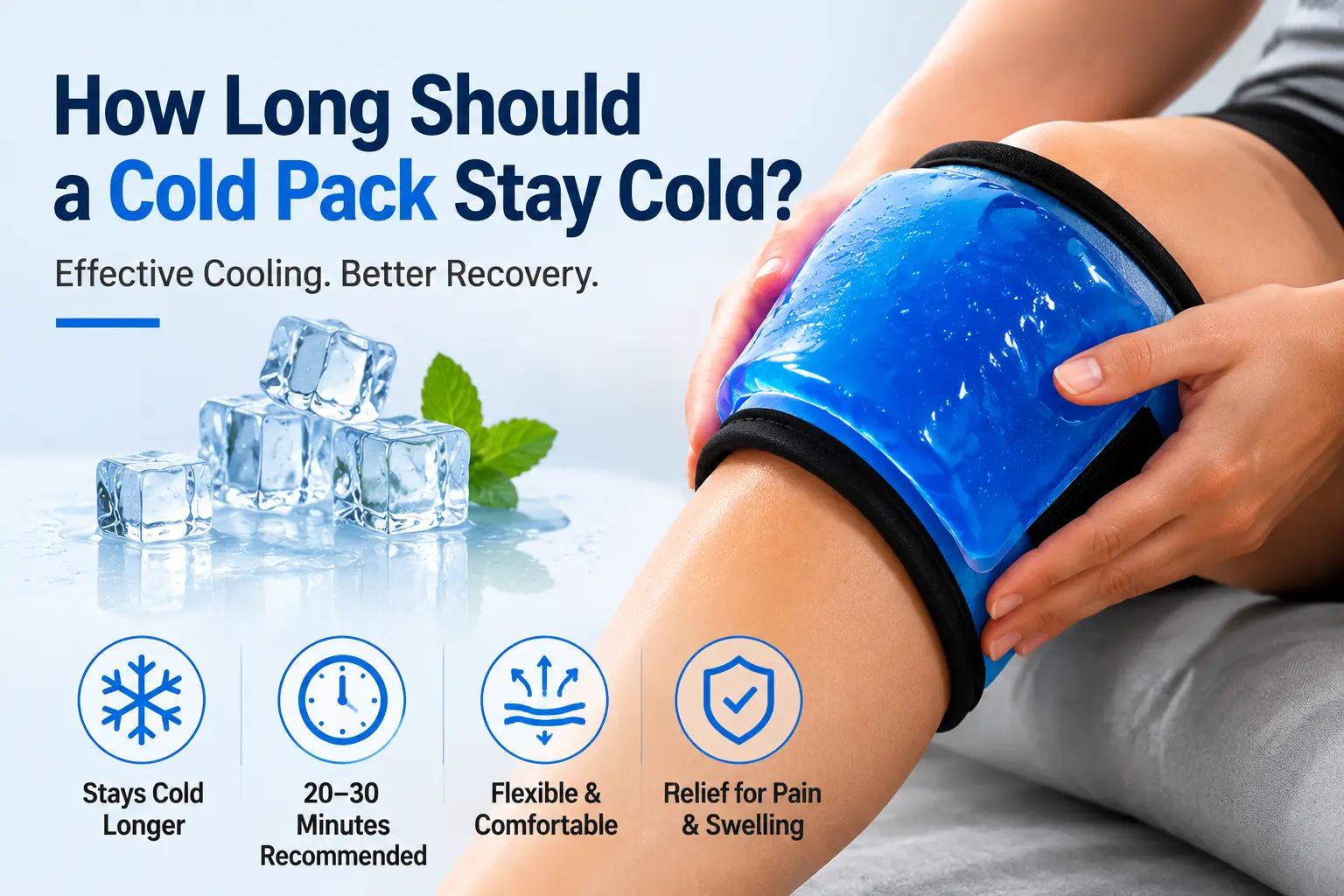
Learn why cold packs warm up, how long cold therapy should last, and what factors affect cooling duration. Discover how manufacturers improve cold pack performance.
How Long Should a Cold Pack Stay Cold?
One of the most common complaints about cold packs is that they do not stay cold long enough. However, many users have unrealistic expectations about cold therapy.
Why Do Cold Packs Warm Up Quickly?
When a cold pack is applied to the body, it continuously absorbs heat from the skin and underlying tissues. The larger the treatment area and the higher the body temperature, the faster the cold pack will warm up.
Several factors affect cooling duration:
Gel formula and filling weight
Pack thickness
Surface area in contact with the body
Ambient temperature
Insulation from fabric covers or wraps
A thicker and heavier cold pack generally provides longer cooling performance.
How Long Should Cold Therapy Last?
According to commonly accepted medical guidelines, most cold therapy sessions should last:
Body Area
Recommended Cooling Time
Knee
15–20 minutes
Shoulder
15–20 minutes
Ankle
15–20 minutes
Elbow
10–15 minutes
Back
15–20 minutes
Neck
10–15 minutes
In most cases, a cold pack that provides effective cooling for 20–30 minutes is sufficient for therapeutic use.
How Can Cooling Duration Be Improved?
Manufacturers can extend cooling time by:
Increasing gel volume and pack thickness
Using high-performance gel formulations
Optimizing pack design for better insulation
Improving body-contact coverage
Using flexible gel systems that remain soft after freezing
Choosing the Right Cold Pack
The best cold pack is not necessarily the coldest one. Users typically prefer products that remain flexible, comfortable, and effective throughout the recommended treatment period.
For most rehabilitation, sports recovery, and pain relief applications, a well-designed cold pack that delivers consistent cooling for 20–30 minutes is often the ideal solution.